
We’ve made this case once before: the real signal in a supply chain rarely shows up as a metric first. With tankers, insurance markets, and the Strait of Hormuz, it showed up quietly, in places nobody was watching, long before the metric ever caught up..
Rare earths are proving the same point right now, in a market most people assume has nothing to do with oil and gas.
Ask most people where rare earths show up, and they’ll say wind turbines, EVs, maybe the phone in their pocket. Almost nobody says refineries. But walk into any fluid catalytic cracking unit, the process that turns crude oil into gasoline and diesel, and you’re standing next to rare earth catalysts doing the work. Lanthanum and cerium make FCC catalysts possible, and catalysts, not magnets, are the leading domestic use of rare earths in the United States, according to the US Geological Survey’s own 2026 count.
That’s the part of the rare earth story that never makes it into the wind turbine headlines. Refining leans on the same handful of elements that magnet makers compete over, and the industry that depends on them most is rarely the one asked about it.
It doesn’t stop at the refinery fence either. Those same materials drive the magnets in EV motors and the direct-drive turbines going up offshore, and they show up again in grid-scale battery chemistries. Refining, renewables, and the grid are all drawing from the same well. That’s worth sitting with the next time someone calls rare earths a clean energy problem and not an oil and gas one.
Zero is the signal
The metric everyone’s waiting for here is a headline: “China halts rare earth exports,” or a price spike on NdPr oxide. That metric is lagging by definition. The signal is sitting in customs data right now. China shipped no gallium, no dysprosium, no terbium, and no yttrium to Japan in June, extending a freeze that traces back to a diplomatic dispute rather than a formal embargo. No press conference. No ban announced. The shipment line for four elements just read zero, month after month, while the rest of the market kept trading normally. That’s the signal. Whatever shortage headline eventually prints is just the metric catching up to it.
The chokepoint was never the mine
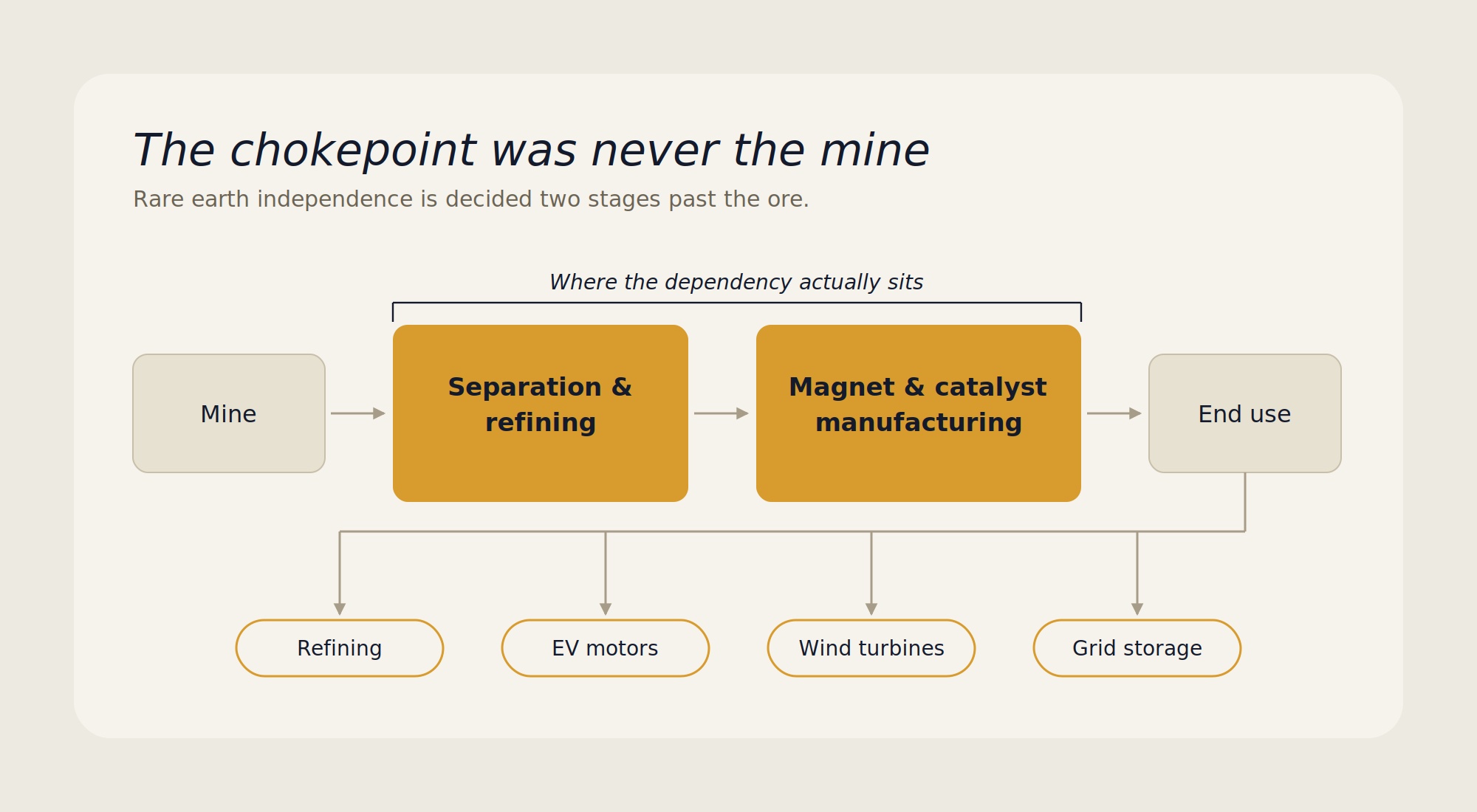 There’s a second signal hiding in a different spot, and it’s one we touched on when we wrote about how far a dependency chain can run before the alternatives disappear. Mining gets the attention because mines are visible and easy to photograph. But the dependency that actually decides whether a supply chain is independent sits in the middle, in refining, separation, and magnet manufacturing, the stages that turn raw ore into something usable. A company can announce a new domestic mine and still be years from independence if that midstream capacity doesn’t exist alongside it. Watching mine output as your leading indicator means watching the wrong metric.
There’s also a date in this that’s easy to miss. China’s broader suspension of its rare earth export controls is currently set to run out on November 10, 2026, though these deadlines have already shifted once and could shift again. Whether it holds or moves, it’s the kind of fixed point that most supply chain teams outside the rare earth world aren’t tracking at all right now.
A decision layer, not a dashboard
This is the same failure mode we wrote about with shipping lanes and insurance markets. A monitoring tool watches the price. A decision layer watches the customs filing, the licensing announcement, the processing capacity, and tells you which contracts, products, or suppliers are actually exposed before the number moves. Polaris I/O treats a rare earth dependency the same way it treats a chokepoint or single-source supplier: never just a line item that shows up once it becomes a shortage, but something with its own signal to track before it does.
The organizations that navigate the next rare earth disruption well won’t be the ones who reacted fastest to the headline. They’ll be the ones who already knew which products, contracts, and production lines ran through those same materials, and had a plan ready before the customs data ever made news.
Nothing gets by you.
Polaris I/O works across national security, intelligence, law enforcement and the Fortune 500 to close the gaps where critical insight gets missed. We connect signals across disparate data so organizations can see more, spot patterns earlier and act before something important gets by them.
If your operations run through rare earth-dependent processes, whether that’s refining, magnet manufacturing, or anything downstream of them, and you don’t have visibility into where those dependencies sit, reach out to Polaris I/O to see what a review of that exposure looks like. Reach out to Jon Robbins at jrobbins@polarisio.com or 214.578.6166.